
Geneticist consultation at the Israeli Medical Center (IMC) in Tashkent
Just 15-20 years ago, undergoing genetic testing was inaccessible to most people. Today, genetic counseling helps many patients and their families understand genetic risks and make informed decisions regarding family planning,
disease prevention, and treatment choices. Consultation with a geneticist is especially important for families with a history of hereditary diseases or for
couples facing conception problems. It helps prevent hereditary diseases and prepare for pregnancy.
The Israeli Medical Center for Reproductive Medicine and Family Health in Tashkent (IMC) offers professional services of medical-genetic counseling, providing a high level of medical care and an individual approach to each patient.
What does a geneticist do
A geneticist specializes in the diagnosis, treatment, and prevention of hereditary diseases. The main areas of a geneticist’s work include:
- Diagnosis of genetic diseases: Analysis of hereditary pathologies, identification of genetic mutations and anomalies.
- Genetic counseling: Assessment of genetic risks, informing patients about possible hereditary diseases and methods of their prevention.
- Prenatal diagnosis: Examination of pregnant women to identify genetic anomalies in the fetus.
- Postnatal diagnosis: Identification and treatment of genetic diseases in newborns and children.
- Screening programs: Conducting screening tests for the early detection of genetic diseases.
When a geneticist consultation is required
Consultation with a geneticist is recommended in the following cases:
- Family history of hereditary diseases: If there are cases of genetic diseases in the family, such as cystic fibrosis, Down syndrome, hemophilia, and others.
- Problems with conception or carrying a pregnancy: In case of repeated miscarriages, stillbirths, or infertility.
- Parental age: Women over 35 and men over 40 are recommended to consult a geneticist before planning pregnancy.
- Fetal anomalies: When ultrasound markers of genetic anomalies in the fetus are detected.
- Screening test results: If the results of non-invasive prenatal testing (NIPT) or other screening tests indicate an increased risk of genetic diseases.
Geneticist consultation during pregnancy
Consultation with a geneticist during pregnancy allows for the identification and prevention of possible genetic pathologies in the future child. The main stages of the consultation include:
- History taking: The geneticist finds out the medical history of the parents, including the presence of hereditary diseases and previous pregnancies.
- Screening tests: Conducting tests to assess the risk of genetic anomalies, such as non-invasive prenatal testing (NIPT) and ultrasound examination.
- Diagnostic tests: If necessary, invasive diagnostic methods, such as amniocentesis or chorionic villus sampling, are prescribed to confirm or exclude genetic diseases.
What to bring to a geneticist appointment
For a geneticist consultation, it is recommended to prepare the following documents:
- Passport or other identity document
- Medical record and results of previous examinations and tests
- Family history of hereditary diseases
- Results of ultrasound examinations and screening tests
- Questions and complaints you wish to discuss with the doctor
How a geneticist consultation at the reproductive center proceeds
- History taking: The geneticist listens to the patient’s complaints, asks questions about family history, previous pregnancies, and medical problems.
- Risk assessment: The doctor analyzes the collected data and conducts an assessment of genetic risks for the patient and their offspring.
- Prescription of tests: Depending on the history results, the geneticist may prescribe additional tests, such as blood tests, ultrasound, amniocentesis, or chorionic villus sampling.
- Consultation and recommendations: After receiving the examination results, the doctor makes a diagnosis and suggests a plan for the prevention or treatment of genetic diseases.
What to ask the geneticist during the consultation
To get the maximum benefit from your geneticist consultation, we recommend preparing questions for the doctor in advance, which are important for decision-making. Here are some of the questions that patients often ask the geneticist during the consultation.
- What genetic tests do I need to undergo?
- What are the risks of transmitting a hereditary disease to my child?
- What methods of prevention and treatment of genetic diseases do you recommend?
- Which screening tests and diagnostic methods are most effective?
- What lifestyle changes can reduce genetic risks?
Scheduling a consultation
You can schedule a consultation with a geneticist at the Israeli Medical Center in Tashkent by phone or through our website. We offer convenient appointment hours and an individual approach to each patient.
Online consultation
For the convenience of our patients, we offer the possibility of conducting online consultations with a geneticist. This allows you to receive qualified medical care without leaving home.
Online consultations are especially convenient for patients living in remote areas or unable to visit the center in person.
Make an appointment
IMC Genetic Laboratory
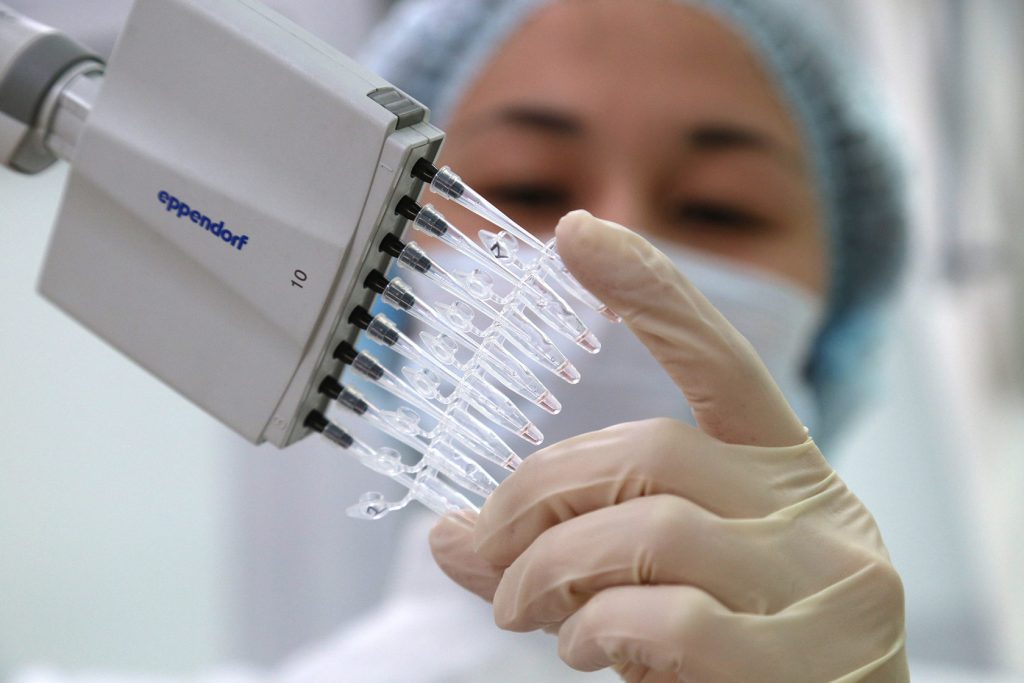
The in-house laboratory of the Israeli Medical Center, equipped with the most modern equipment, is the only one in Uzbekistan that in full compliance with the legislation performs all tests on the country’s territory, without exporting biomaterial abroad.
We conduct a wide range of genetic tests and research at a high level:
- Preimplantation genetic diagnosis (PGD): Detection of genetic anomalies in embryos before their transfer to the uterus.
- Non-invasive prenatal test (NIPT): Assessment of the risk of genetic anomalies in the fetus starting from the 10th week.
- Exome sequencing: examination of all coding regions of the genome to identify mutations associated with hereditary diseases.
- MyScreen (couple’s screening): analysis of over 1800 of the most common mutations in 500+ genes
- and others
Advantages of the Israeli Medical Center for Reproductive Medicine and Family Health in Tashkent
- Highly qualified specialists: Our geneticists have many years of experience and high qualifications, confirmed by international certificates.
- Modern equipment: The center is equipped with the latest technologies and equipment, which allows for precise and reliable research.
- Individual approach: We develop personalized examination and treatment plans, considering all the characteristics and needs of our patients.
- Comprehensive approach: All necessary tests and procedures can be completed in one place, saving your time and effort.
- Emotional support: Our specialists are ready to provide you with support and attention at every stage of treatment, understanding that seeking medical help can cause anxiety.
Frequently asked questions
What genetic tests are performed at IMC?
IMC performs various genetic tests, including non-invasive prenatal testing (NIPT), preimplantation genetic diagnosis (PGD), tests for genetic mutations, and other research.
How to prepare for a genetic test?
Preparation for a genetic test depends on its type. The doctor will give detailed preparation instructions, which may include recommendations on diet, avoiding certain medications, and rest regimen.
When should I see a geneticist?
You should see a geneticist if there is a family history of hereditary diseases, problems with conception or carrying a pregnancy, as well as when planning pregnancy after the age of 35.
Is it possible to get an online consultation with a geneticist?
Yes, IMC offers the possibility of conducting online consultations with a geneticist. This is convenient for patients living in remote areas or unable to visit the center in person.
What precautionary measures are taken in the IMC genetic laboratory?
Our genetic laboratory meets all safety and quality standards. We use modern equipment and technologies to conduct accurate and reliable research.
The Israeli Medical Center in Tashkent offers comprehensive services for medical-genetic counseling and diagnosis of genetic diseases. We are ready to support you at every stage of treatment and help you achieve your dream of healthy offspring.
Reviews
Klinikadagi barcha shifokorlar va xodimlari yuqori malakali o’z ishining yetuk mutaxassislari va jahon standartlari darajasida faoliyat olib borishlari menga yoqdi.O’zbekistondagi reproduktiv klinikalar ichida №-1 klinika.
Assalomu aleykum yaxshimisiz, sizlarga kattakon rahmat aytmoqchiman ayniqsa Anvar Davranovichga kattakon rahmat bizlarning eng katta orzularimizdan biri bòlgan ota-ona bòlish orzuimiz amalga oshmoqda, kecha menga ПГТ-а javoblari ijobiy ekanlikini aytganlarida rosa hursand bòldim insha alloh orzuimiz sizlar tufayli amalga oshmoqda klinikangizga kattakon rahmat
биз 3 йил бепуштликдан сунг Дильнозопамда даволаниб юрдик, жуда билмли, хушмуомала ва сабрли шифокор, Оллох инояти билан угил-киз эгизак фарзандлик болдик. Мен хам оналик макомига эришдим.Клиника ходимлари жуда хуш муомала хаммага маслахат бераман
Я бы хотела написать про очень хорошую клинику ИМЦ, и особенно про врачей которые там работают. Я обслуживалась у прекрасного врача Кудратова Дилноза Шарифовна! Спасибо ей за такое внимание пациентам, после 14 лет бесплодия я наконец то стану мамой, и все благодаря ей. если когда-нибудь кому нибудь нужна будет помощь то я советую только к ней и в эту клинику очень персонал и обслуживание на высшем уровне!
жуда хушмуомала дохтир, мен эко килдирдим 7 йил деганда биринчи уринишда йук хомиладор болдим мана кеча кизалогимизни багримга босволдим миннатдорман бошидан охиригача куллаб келдилар маслахатларини аямай.
Спасибо всем врачам особенно Анвару Даврановичу и всем остальным