
Women’s health is the foundation of a balanced life. Yet too often, women postpone doctor visits due to fear, lack of time, or mistrust in medicine.
At the Israeli Medical Center (IMC), we have created a space where every woman can be herself — ask any questions, speak openly about personal concerns, and receive professional, compassionate care without judgment.
Why Gynecology at IMC Is About More Than Medicine
Our gynecologists are not just doctors — they are your allies and partners.
We understand how important it is to feel heard, especially when it comes to such personal topics as pregnancy, menopause, or intimate health.
At IMC, there are no “awkward” questions — only professional care, empathy, and evidence-based solutions.
What Gynecology at IMC Includes
Gynecology at IMC is a comprehensive approach that unites prevention, accurate diagnostics, treatment, and recovery.
We accompany women through every stage of life — from the first menstrual cycle to menopause and beyond.
1. Diagnosis: Identifying the Cause to Find the Solution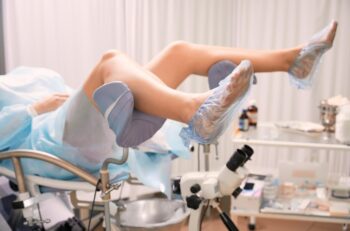
We use diagnostic technologies that meet Israeli and European medical standards, providing accurate results within 1–2 days.
Laboratory Testing
- Genetic Panels
Infertility and reproductive panel, hypogonadism, breast and ovarian cancer panel, hereditary oncology syndromes, hematological panels. - Hormonal Panels
Progesterone, estradiol, FSH, LH, prolactin, AMH, thyroid profile (TSH, T3, T4). - Infectious Diagnostics
PCR for HPV (including types 16 and 18), chlamydia, herpes, mycoplasma, and full bacterial cultures with antibiotic sensitivity testing. - Oncomarkers
CA-125, HE4, CEA — for early detection of pathologies.
Imaging and Instrumental Diagnostics
- 3D/4D Ultrasound with Voluson E10
Used for pregnancy screening, detection of fibroids, cysts, and endometriosis. - Colposcopy with Digital Visualization
Up to 40× magnification allows detection of precancerous cervical changes. - Hysteroscopy
A minimally invasive uterine examination to identify and treat polyps, adhesions, or structural abnormalities.
Clinical Case Example
A 35-year-old woman with irregular cycles underwent hormonal testing and ultrasound, which confirmed polycystic ovary syndrome (PCOS). After personalized therapy and lifestyle modification, her cycle normalized, and she conceived naturally within a year.
2. Treatment: Minimal Intervention, Maximum Efficiency
We prioritize organ-preserving and fertility-sparing methods whenever possible.
Conservative Therapy
- Treatment of chronic inflammatory diseases (adnexitis, endometritis) with personalized medication regimens
- Hormonal correction for PMS, menopause, and PCOS
- Vaginal microbiota restoration after antibiotic use or infection
Minimally Invasive Surgery
- Hysteroscopy
Removal of endometrial polyps, fibroids, or intrauterine adhesions — without incisions, performed through natural access.
Procedure time: 20–40 minutes. Recovery: 1–2 days. - Laparoscopy
Treatment of endometriosis, ovarian cysts, and ectopic pregnancies.
Benefits: minimal scarring, faster recovery, reduced risk of adhesions. - Labiaplasty
Correction of labial shape to eliminate discomfort during physical activity or when wearing tight clothing. - Emergency Care
Prompt management of acute inflammatory and gynecological conditions.
3. Reproductive Health: Turning Motherhood Dreams into Reality
We support women from pregnancy planning to postpartum recovery.
Preconception Care
Comprehensive check-ups such as “I’ll Be a Mom” and “Women’s Health” packages, as well as preparation for IVF cycles.
Infertility Treatment
Ovulation induction, IUI, IVF, and ICSI programs, including PGT-A for genetic screening of embryos.
Pregnancy Management
Screening in all three trimesters, NIPT, CTG, cervical length monitoring, Doppler studies, and programs for women at risk of miscarriage.
Cryopreservation
Freezing of oocytes and embryos to preserve fertility.
Patient Story
Shakhnosa, 40 years old, came to IMC after two failed IVF attempts elsewhere.
Following PGT-A testing, a healthy embryo was selected, resulting in the birth of twins.
4. Aesthetic Gynecology: Confidence in Every Detail
- Treatment of Stress Urinary Incontinence
Laser therapy and hyaluronic acid injections. - Postpartum Vaginal Rejuvenation
Restoration of tone and elasticity after childbirth. - Treatment of Vaginal Dryness
Radiofrequency and PRP therapies to regenerate the mucosa.
Why Women Choose IMC 
- Expert-level equipment: Karl Kaps colposcopes, GE Voluson E10 ultrasound with HDlive technology
- International team: gynecologists, endocrinologists, reproductive specialists, mammologists, and oncogynecologists
- Personalized care: individualized health records and prevention recommendations
- 24/7 support: direct communication with your physician via personal coordinator
When to See a Gynecologist
- Irregular, painful, or heavy menstrual periods
- Bleeding between cycles or after menopause
- Pain during intimacy
- Itching, burning, or unusual discharge
- Pregnancy planning or recurrent miscarriages
Even without symptoms, an annual preventive check-up is the best way to detect and prevent serious conditions early.
For example, colposcopy can identify cervical dysplasia at a stage when it can be treated without surgery.
Before Your Appointment
To make your consultation as effective as possible:
- Bring previous test results, medical reports, and ultrasound scans
- Pelvic ultrasound — on days 5–7 of the menstrual cycle; hormones (FSH, LH, prolactin) — on days 2–3
- 48 hours before the visit: avoid vaginal suppositories, douching, tampons, and sexual activity
- Blood tests — on an empty stomach; vaginal swabs — during dry (non-menstrual) days
Pricing and Appointments
Thanks to our in-house laboratory, IMC offers the best balance of quality and cost.
You can find the current price list on our website or by phone at +998 555 020 026.
We are open Monday–Saturday 8:00 AM–6:00 PM and Sunday 8:00–11:00 AM.
Address: 3 Darkhan Street, Tashkent
Online booking is available through the website form — replies within 15 minutes.
Your Health Is Our Mission
At the Israeli Medical Center, you are not just a patient — you are part of our family.
We respect your choices, ensure full confidentiality, and do everything to make you feel safe and supported.
For patients from other regions, all procedures can be arranged within one day by prior appointment.
With care,
The Israeli Medical Center team, Tashkent
Send a request
Часто задаваемые вопросы
I’m 50. Do I still need to visit a gynecologist?
Yes! After menopause, the risk of osteoporosis, uterine prolapse, and certain cancers increases. We recommend the following annual and periodic check-ups:
• Cervical cytology (Pap test) — every year
• HPV test (high-risk hrHPV) — once every 3 years
• Colposcopy — annually, especially if HPV test is positive
• Pelvic ultrasound — once a year
• Mammography (or at least breast ultrasound) — annually
• Complete blood count, glucose, and lipid profile — yearly, to assess diabetes and cardiovascular risk
• Hormonal evaluation and correction for hot flashes and vaginal dryness
• Bone density testing
• Fecal occult blood test for colon cancer screening
Is hysteroscopy safe if I have a fibroid?
Yes, if the fibroid is small (up to 4 cm) and located inside the uterine cavity.
In more complex cases, we perform hystero-resectoscopy — a precise minimally invasive method that removes fibroids without damaging healthy tissue.
Can I take tests without a doctor’s referral?
Of course. You can tell our reception staff which tests you need.
For example, HPV PCR or hormonal panels can be done without prior consultation.
How long does it take to get test results?
Usually about 2 hours.
Laboratory results and doctors’ reports are available in your patient app and are also sent via SMS link as soon as they are ready.
How long does it take to receive biopsy results?
Typically 5–7 days.
In urgent cases (for example, when cancer is suspected), results are available within 72 hours.
Do you offer loyalty or payment programs?
Yes!
Patients undergoing infertility treatment or complex surgeries can take advantage of interest-free installment payment plans.
How much time does a full gynecological check-up take?
Usually just two visits, each lasting about 1–1.5 hours:
- First visit: laboratory tests and main diagnostic procedures
- Second visit: in-person consultation to review all test results and discuss a personalized care plan
Reviews
Вчера была на консультации у врача ,,,выражаю особую благодарность,, за ваше терпение и успех в вашей карьере,, а также верю в то что вы нам поможете ,,, спасибо огромное вам
Очень довольна ее профессионализмом . Постоянно была на связи. Человек с добрым сердцем
Азамат Амирович прекрасный врач, профессионал своего дела! Получили прекрасную консультацию, проходим этап подготовки к эко!
Проходила лечение у врача Кудратовой Дилнозы Шарифовны очень довольна ее профессионализмом, 6 месяцев наблюдалась у нее и долгожданная беременность наступила, сейчас на 12 неделе прошла скрининг все отлично, рекомендую.
Одна из лучших специалистов в Ташкенте у кого мы были. Доктор Ганиева оказывает высокопрофессиональный и максимально скурпулезный подход к каждой роблеме.
Наблюдались у Дильнозы Шарифовны очень граммотный и доброжелательный врач, добились долгожданной беременности,прошли скрининг все в порядке,в лаборатории приветливый персонал.