
The Israeli Medical Center of Reproductive Medicine and Family Health in Tashkent offers a full range of laboratory tests aimed at the accurate diagnosis and monitoring of patients’ health status. Our laboratory is equipped with advanced equipment and managed by highly qualified specialists, ensuring high accuracy and reliability of results.
What is laboratory diagnostics?
Laboratory diagnostics is a field of medicine that deals with the study of biological materials (blood, urine, tissues, and other body fluids) to identify various diseases and assess health status. These tests help doctors make an accurate diagnosis, prescribe effective treatment, and monitor the recovery process.
Laboratory and embryological laboratory at IMC
The Israeli Medical Center has its own laboratory and an embryological laboratory, allowing a wide range of tests to be performed on-site. This significantly reduces the time to obtain results and increases their accuracy.
The laboratory is equipped with advanced equipment for performing all types of tests, from general blood tests to complex genetic tests. Our specialists have a high level of qualification and constantly improve their knowledge to meet international standards.
The embryological laboratory plays a key role in in vitro fertilization (IVF) procedures and other assisted reproductive technologies (ART). All necessary manipulations with eggs and embryos are performed here, including incubation, cryopreservation, and genetic testing.
Our embryological laboratory is equipped with “smart” Timelapse incubators, which allow monitoring embryo development 24/7 in an environment close to natural. These incubators take pictures of the embryos every 10 minutes, allowing for time-lapse videos of their development. This helps embryologists timely identify deviations in embryo division and select the best ones for transfer and genetic analysis.
The use of such incubators minimizes stress on the embryos, as there is no longer a need to take them out of the incubator for daily microscopic evaluation. This significantly increases the chances of successful implantation and further development.
IMC embryologists are the only ones in Uzbekistan certified by the American Association of Embryologists (ASRM). This confirms their high level of qualification and knowledge, corresponding to international standards. All specialists regularly undergo training and professional development to stay updated on the latest achievements in reproductive medicine.
Types of laboratory diagnostics at IMC 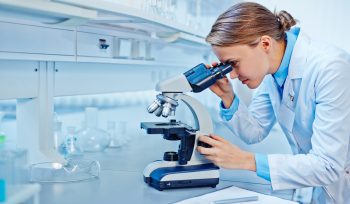
Our center offers a wide range of laboratory tests, including:
- General clinical tests:
- Blood group: Determination of blood group for compatibility during blood transfusion and preparation for surgeries.
- Complete blood count (CBC+ESR): Assessment of the general condition of the body, detection of inflammatory processes.
- Blood group and Rh factor: Determination of blood group and Rh factor for pregnancy planning and compatibility during blood transfusion.
- Electrolytes and trace elements:
- Magnesium (Mg), Sodium (Na), Potassium (K), *Ionized calcium (ISE-iCa2+)*, Chloride (ISE-Cl-): Assessment of electrolyte balance and diagnosis of various diseases.
- Iron (Fe), Calcium (Ca), Phosphorus: Detection of deficiency or excess of trace elements, assessment of bone tissue condition and metabolism.
- Lipids:
- Triglycerides (Trig), Total cholesterol (Chol), LDL cholesterol (LDL), HDL cholesterol (HDL): Assessment of lipid profile for diagnosis and prevention of cardiovascular diseases.
- Homocysteine (Homocysteine): A marker of risk for cardiovascular diseases and metabolic disorders.
- Assessment of the hemostasis system:
- D-dimer (D-dimer), Activated partial thromboplastin time (APTT), Fibrinogen (Fibr), Prothrombin index (PTI), INR (INR), Thrombin time (TT), Prothrombin time (PT): Assessment of blood coagulation for diagnosing hemostasis disorders.
- Basic coagulogram (PT, PTI, PT, TT, INR, APTT, Fibrinogen): Comprehensive study of the blood coagulation system.
- Blood clotting time (BCT): Diagnosis of blood coagulation disorders.
- Biochemical studies:
- Vitamin B12 Clia: Assessment of vitamin B12 levels for diagnosing deficiency and anemias.
- Blood urea (Urea), Uric acid: Diagnosis of kidney functions and metabolic disorders.
- Total serum protein (TP), Total bilirubin (TB), Lactate dehydrogenase (LDH): Assessment of the condition of the liver, kidneys, and other organs.
- Total IgE (IgE): Diagnosis of allergic conditions.
- Glycated hemoglobin (HbA1c), Glucose (Glu): Monitoring blood sugar levels for diagnosis and monitoring of diabetes.
- Gamma-glutamyl transferase (GGT), Ferritin (Ferritin): Assessment of liver functions and iron stores.
- Direct bilirubin (DB), Creatinine (Crea): Diagnosis of kidney functions and liver condition.
- C-peptide: Assessment of pancreatic function.
- Aspartate aminotransferase (AST), Alanine aminotransferase (ALT): Markers of liver damage.
- Alkaline phosphatase (ALP), Albumin (Alb): Assessment of bone tissue condition and liver functions.
- Alpha-Amylase (Diastase): Diagnosis of pancreatic diseases.
- Microalbumin in urine (Microalb): Early marker of kidney damage in diabetes.
- Globulin (Globulin), Indirect bilirubin (IB): Assessment of overall protein composition and liver function.
- HOMA index: Assessment of insulin resistance.
- Biochemistry 9 indicators (ALT, AST, Urea, Creatinine, Total bilirubin, Direct bilirubin, Indirect bilirubin, Total protein, Glucose): Comprehensive assessment of the body’s condition.
- Hormonal studies:
- Thyroid-stimulating hormone TSH (TSH), Anti-Tg (TGA), Thyroglobulin (Tg): Diagnosis of thyroid diseases.
- Total thyroxine T4 (T4), Total triiodothyronine T3 (T3): Assessment of thyroid function.
- Insulin (Ins): Monitoring insulin levels for diabetes diagnosis.
- Free thyroxine T4 (fT4), Free triiodothyronine T3 (fT3): Assessment of the levels of active forms of thyroid hormones.
- Cortisol (Cort): Assessment of adrenal function.
- Anti-TPO (AT-TPO): Detection of autoimmune thyroid diseases.
- Vitamin D (Vit D): Assessment of vitamin D levels for diagnosing its deficiency.
- *Cortisol in 24-hour urine (Cort. in 24h urine)*: Monitoring cortisol levels throughout the day.
- Adrenocorticotropic hormone ACTH (ACTH): Assessment of pituitary function.
- Parathyroid hormone (PTH Clia): Diagnosis of parathyroid diseases.
- Growth hormone GH (HGH): Assessment of pituitary function.
- Antibodies to thyroglobulin (Anti-Tg): Detection of autoimmune thyroid diseases.
- Adrenaline (Adrenaline), Noradrenaline (Noradrenaline): Assessment of adrenal function.
- Aldosterone (Aldost.): Assessment of the level of the hormone regulating water-salt balance.
- PCR (polymerase chain reaction):
- *Herpes simplex virus 1/2 in urogenital smear*, Toxoplasma gondii in blood: Diagnosis of infections.
- Folate cycle 4 genes: Assessment of genetic predispositions.
- Cytomegalovirus (CMV) in blood, Mycoplasma genitalium in urogenital smear and urine, Candida in urogenital smear, Gardnerella vaginalis in urogenital smear, Gonococcus in urogenital smear and urine, Trichomonas vaginalis in urogenital smear and urine, Ureaplasma urealyticum in urogenital smear and urine, Chlamydia trachomatis in urogenital smear and urine: Detection of sexually transmitted infections.
- AZF deletion: Genetic testing for male infertility.
- CMV in saliva, *HPV 16/18 (Smear)*, HPV Screen titer 14, Floroscreen: Diagnosis of viral infections.
- *PCR test for SARS-CoV-2 determination*: Diagnosis of COVID-19.
- Infections:
- Toxoplasma Gondii IgM (Toxo IgM), Toxoplasma Gondii IgG (Tox IgG), Rubella IgM (Rub IgM), Rubella IgG (Rub IgG): Detection of antibodies to toxoplasmosis and rubella.
- *Herpes simplex virus 1/2 antibodies IgM, IgG*, HBsAg (Hepatitis B), Helicobacter pylori IgM, IgG, Cytomegalovirus IgM, IgG, HCV (Hepatitis C), HAV IgM (Hepatitis A): Diagnosis of viral infections.
- Brucella IgM, IgG, Chlamydia trachomatis IgM, IgG, Mycoplasma hominis IgM, IgG, Ureaplasma urealyticum IgM, IgG: Detection of antibodies to infections.
- Cytology/histology:
- Histology after surgery: Examination of tissues for disease diagnosis.
- Cervical cytology (Pap smear): Detection of precancerous and cancerous changes in cervical cells.
- Stool tests:
- Coprology: Stool analysis to assess the state of the digestive system.
- Stool for worm eggs: Diagnosis of parasitic infections.
- Fecal elastase activity: Assessment of pancreatic function.
- Fecal calprotectin: A marker for inflammatory bowel diseases.
- Stool for carbohydrate determination: Diagnosis of lactase deficiency.
- *Alpha-1 antitrypsin in stool*, Zonulin: Assessment of intestinal condition.
Embryological research and services
The following studies and procedures are performed in our embryological laboratory:
- In vitro fertilization (IVF). A procedure where a woman’s eggs are fertilized with sperm outside the body in a laboratory setting. The resulting embryos are cultured and then transferred into the uterus.
- Intracytoplasmic sperm injection (ICSI). A method where a sperm is injected directly into the cytoplasm of an egg. This method is used for male infertility.
- Embryo cryopreservation. The procedure of freezing and storing embryos for future use. This allows embryos to be preserved for future IVF cycles.
- Preimplantation genetic diagnosis (PGD). Genetic analysis of embryos before transfer into the uterus to identify genetic abnormalities. This helps select the healthiest embryos for transfer.
- Semen analysis. Accurate analysis of sperm parameters using an automated SCA CASA analyzer. This analysis includes assessment of motility, concentration, morphology, DNA fragmentation, and sperm viability.
Advantages of laboratory diagnostics at IMC
- High-precision equipment: Use of the latest equipment, such as Timelapse incubators and other modern technologies for performing accurate and reliable tests.
- Qualified specialists: Our doctors and laboratory technicians have many years of experience and high qualifications, ensuring high diagnostic quality. Our embryologists have international certification and work experience in leading clinics worldwide.
- Wide range of tests: The ability to perform all necessary tests on-site, without the need to send samples to other laboratories.
- Speed of obtaining results: Thanks to our own laboratory, test results are available in the shortest possible time.
- Individual approach: A personalized examination and diagnosis plan for each patient, taking into account their individual needs and health status.
- Confidentiality and security: Strict adherence to all confidentiality and security standards when processing biological materials and patient data.
- Innovative technologies: The use of an artificial intelligence system for decision-making in ART procedures increases the accuracy and effectiveness of treatment.
IMC offers international-level laboratory diagnostics in Tashkent
Laboratory diagnostics is an integral part of the high-quality medical care provided by the Israeli Medical Center of Reproductive Medicine and Family Health in Tashkent. The IMC laboratories are equipped with modern equipment and managed by experienced specialists, guaranteeing the accuracy and reliability of results. You can get tested in our laboratory at a time convenient for you at an affordable price and receive accurate diagnosis and effective treatment. Contact us to receive professional help and support on your path to health and well-being.